
Philippine Art has its “past” and “present” yet it still continues to develop by various contemporary artists. The past history of Philippine Art has gone through various process for its production. With their different context in terms of style, history, and cultural, the symbols and meanings of the artworks are depicted.
For one to understand the importance and influence of Philippine Art to the present, here are some known artforms present in the Pre-conquest or the period before the coming of the first colonizers.
Pre-Conquest Artforms
Mayvanuvanua
According to Maria F. Mangahas, the term “Mayvanuvanua” refers to a sacrificial rite performed at the beginning of the summer fishing season by mataw fishers in Batanes. It is an act of attraction to successfully capture the fish dorado for a limited period of time.

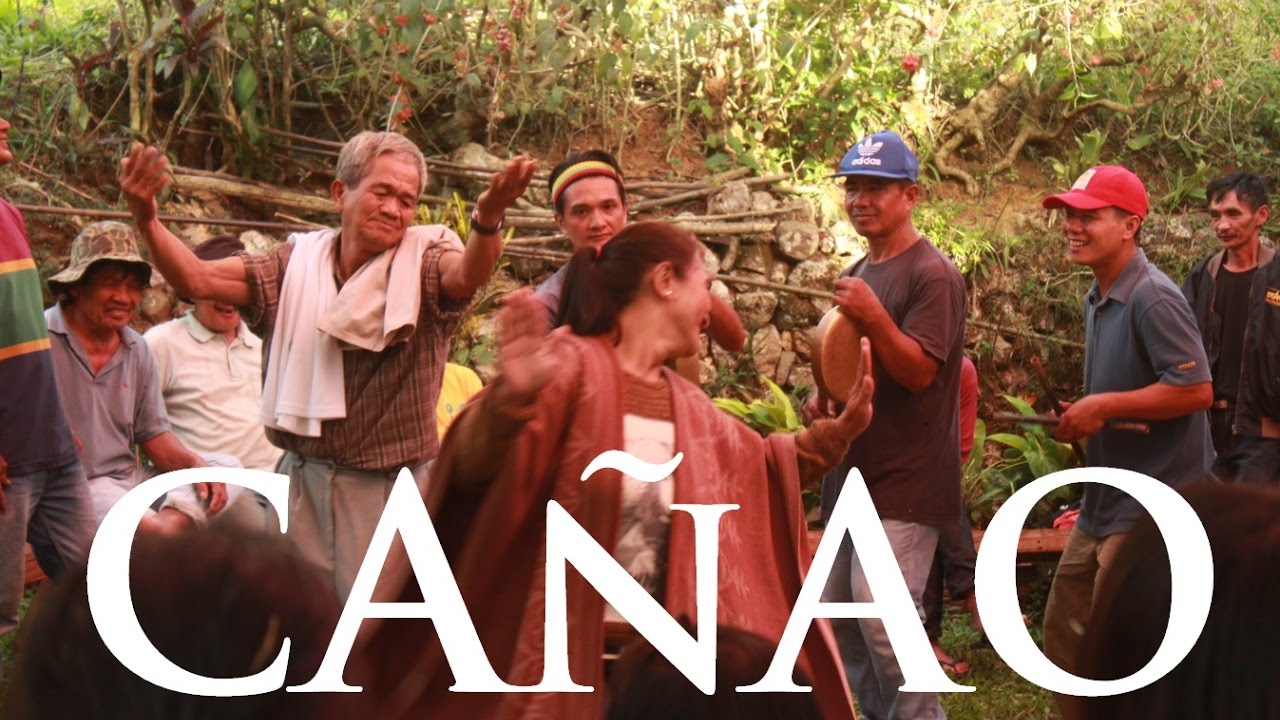
Cañao or Kanyaw
According to the Rotary Club of Baguio, “Cañao” is a local term for the ritual-dance performed during native feasts or celebrations in the highlands of the Cordilleras–in the Luzon area of the Philippines. The ritual is done as a symbol of celebration or expectation for a fruitful harvest.
Mumbaki or Shaman
According to Grace Grabrito, the term “Mumbaki” is a local term that translates to a religious specialist meaning “sayer of prayers” for the Ifugaos. Almost every adult in the region is a mumbaki who practices the tenets of the religion which they are associated with. Each mumbaki invokes prayers and rituals to various deities, though central to it is their belief in one supreme deity, Maknongan and the common sets of indigenous beliefs. These mumbakis offers prayers during wedding, thanksgiving, funeral, and other occasions. They also open the graves of their ancestors and bring home the remains for a canao. They have memorized almost every oral traditions, stories and lineages which are passed on from generation to generations which they perform as rituals.

Kashawing
According to Riya Lopez, the term “Kashawing” is a known ritual for the Maranaos. It is performed to ensure good harvest.

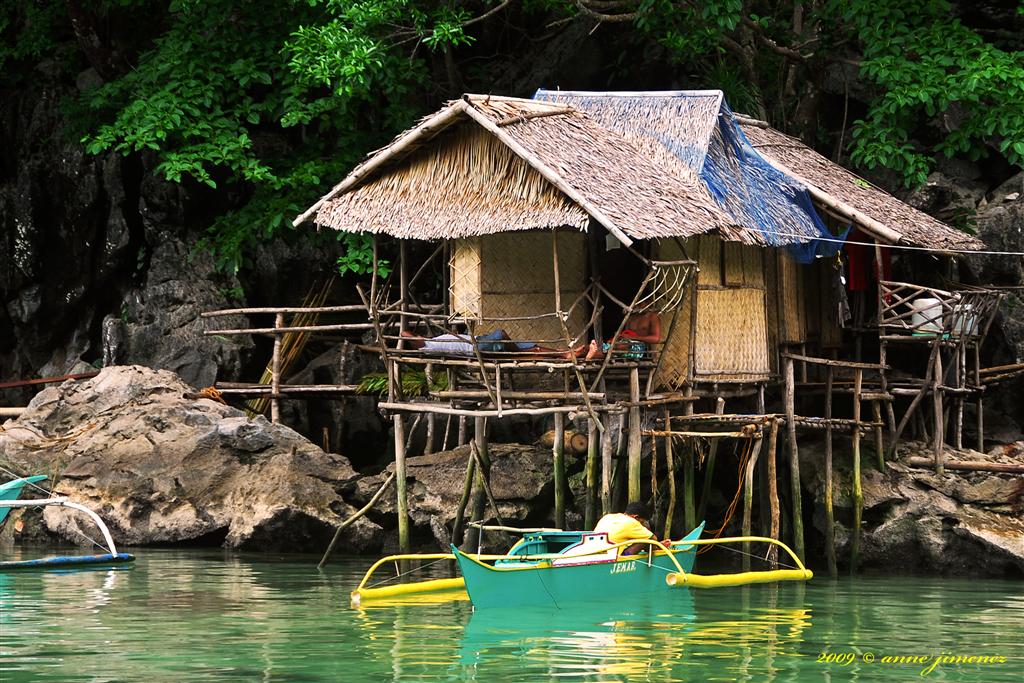
Tagbanwa
According to the California State University East Bay, the term “Tagbanwa” refers to ethnic group located in north and central Palawan. The Tagbanwa are noted for the complicated Pagdiwata ritual, held to celebrate various occasions including bountiful harvests and weddings. The ritual involves the drinking of rice wine from Chinese stoneware jars through bamboo straws. The Tagbanwa exploit forest resources including copal, rattan, and wax for income; they also craft iron with the double-bellows forge. They are one of the few remaining peoples still using the blowgun. Kinship is reckoned bilaterally, although there is a bias towards matrilocality after marriage. Affinal relations are tenuous, and “in-law avoidance” is practiced.
Kudyapi
According to Fekke Jager, “Kudyapi” is a known instrument of the Maranaos. The instrument is classified as a chordophone and is a two stringed boat lute. It is made out of wood. One string is for the melody and the other one is for the drone. Eight frets is originally held in place, placed on the neck of the lute by a sticky rubbery substance, propolis, produced by honey bees to repair damages and openings in the hive. The lute is decorated with floral motives; the tail is carved to represent a stylised crocodile head.

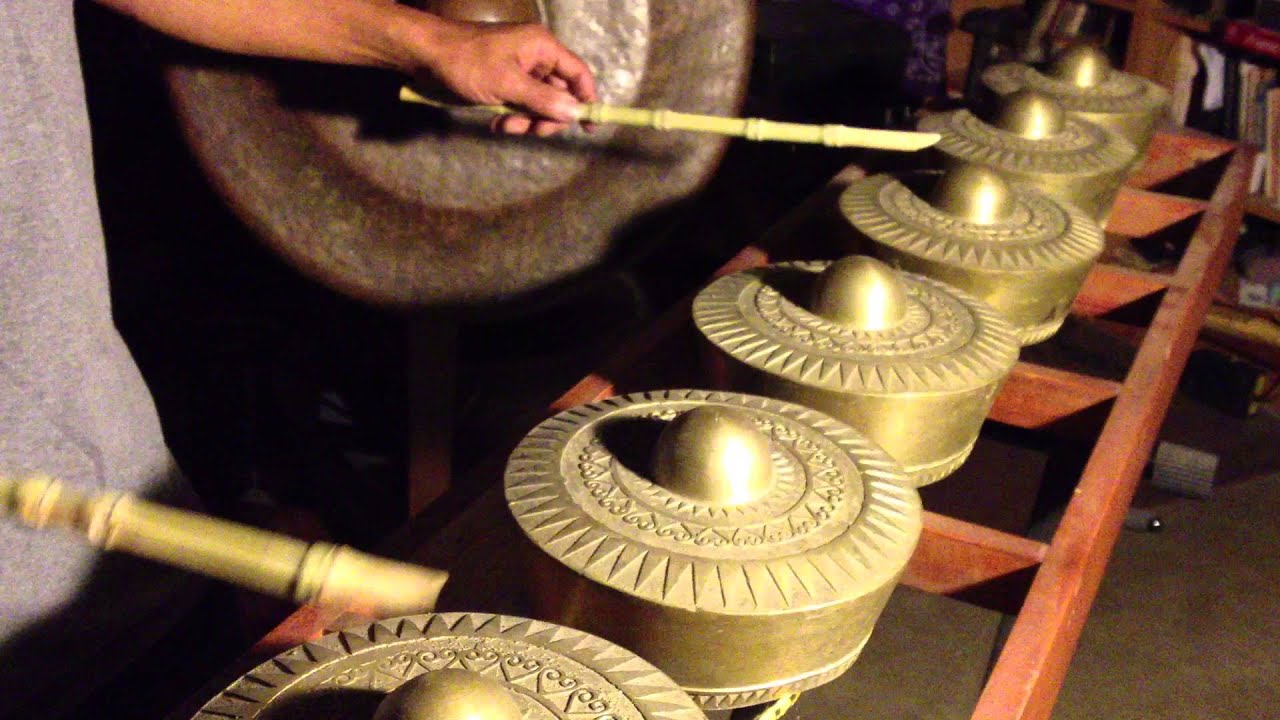
Kulintang
According to Larry Catungal, “Kulintang” is a musical tradition can be found across the Southeast Asian Archipelago. The style of kulintang we played is found in the Southern Philippines among the Maguindanaoan people, in the province of Maguindanao, Mindanao. It consists of 7 to 9 bossed or knobbed bronze or brass pot gongs, which are suspended on a strung cord. Typically, there are 8 gongs, though this may vary from kulintang set to set. The tuning of the gongs themselves will vary too, in that each gong maker and kulintang player have their own perceptions of good tuning. There are as many tunings as there are sets according to some kulintang players. The pot is played with two unpadded soft word beaters.
Gansa or Gangsa
According to Scribd, “Gangsa” is the name of a completely different instrument, one which is indigenous to the cultures found in the mountain regions (the Cordillera) of the northern Philippines. The gangsa of the northern Philippines is a single hand-held smooth-surfaced gong with a narrow rim. A set of gangsa, which is played one gong per musician, consists of gangsa tuned to different notes, depending on regional or local cultural preferences. The number of gangsa in a set varies with availability, and depends on the tradition of a particular ethnic group of the Luzon Cordillera:Kalinga, Ifugao, Bontoc, etc.

Agong or Agung
According to Larry Catungal, “Agung” is the fourth instrument of the Kulintang ensemble. You may find one of two agung in an ensemble, which are usually hung either on a stand or on a sturdy tree branch. The agung is played by one or two – depending on the number of agung – using a rubber-padded beater, and is played on both the boss/knob and the face of the gong.

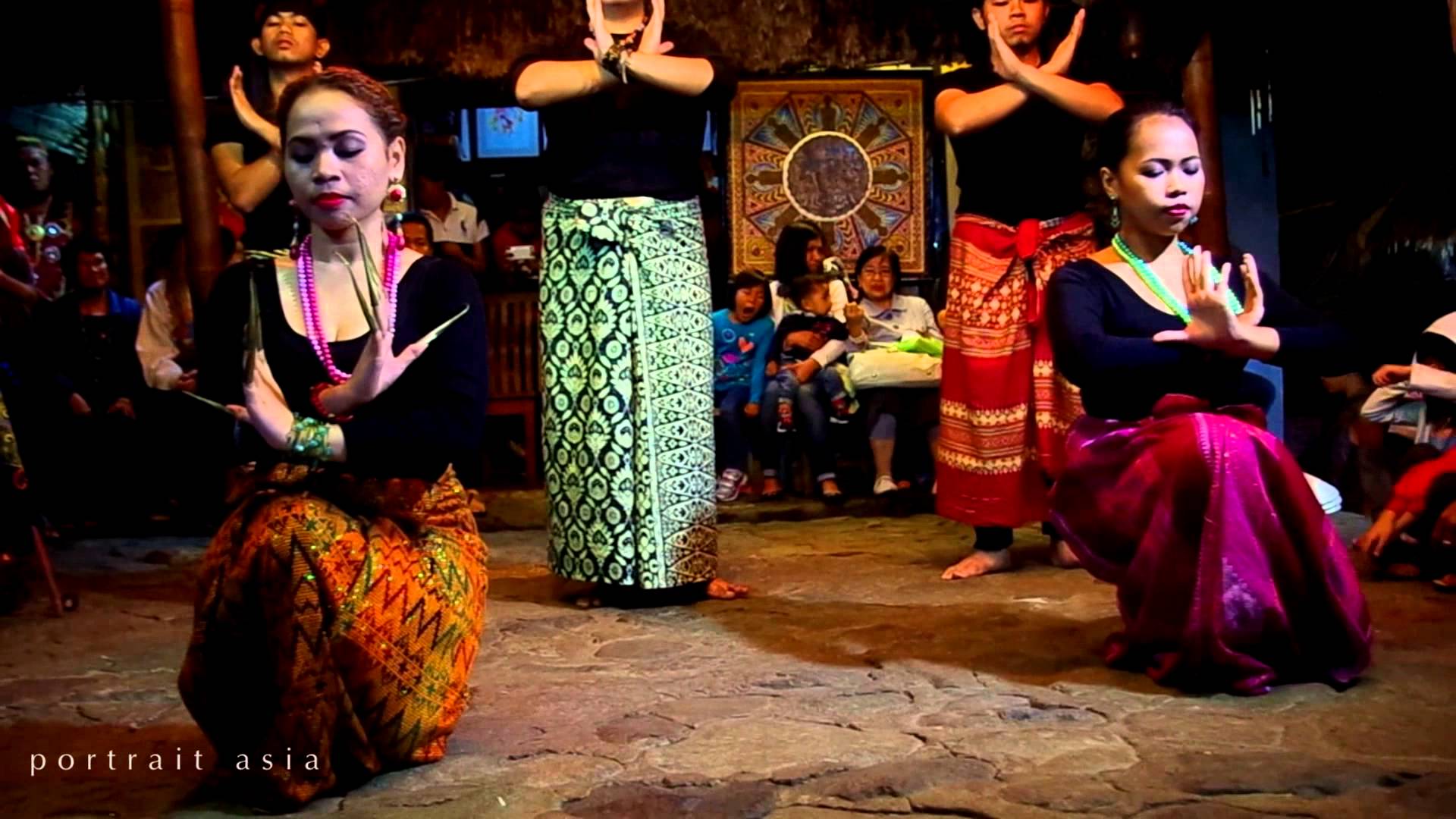
Pangalay
According to LIKHA.org, “Pangalay” or also known as “Sea Gypsies” is a native dance of the Badjao. Pangalay is a dance that emphasizes the agility of the upper body. The rhythmic bounce of the shoulder with simultaneous alternating waving of arms are the basic movement of this dance. The pangalay is commonly performed at weddings and other social gatherings.
Kinabua
According to Joel Velasquez, “Kinabua” is a dance performed by a man and a girl or two girls. The dance portrays the hawks’ use of sweet songs to lure out the hen and the chicks that are then made into a meal. The dancers’ feet make rapid movements, creating circular patterns around each other, as their arms spread out like wings of eagles.

Banog-banog
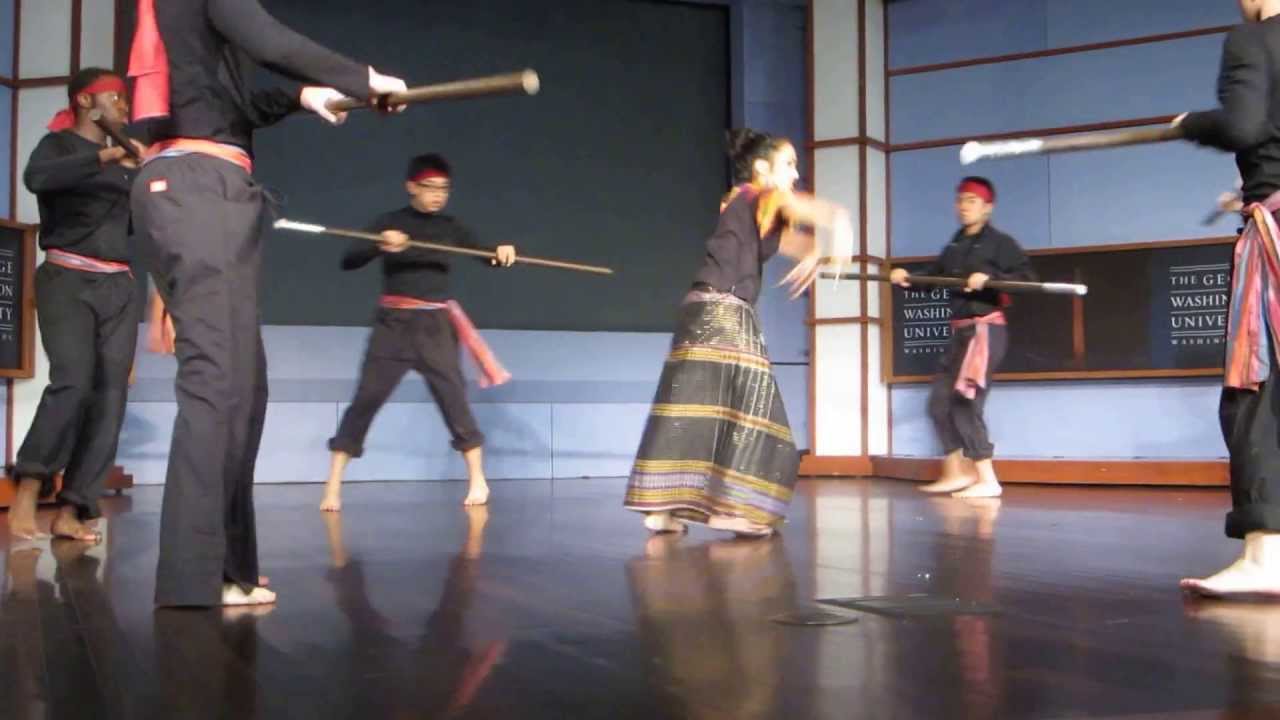
According to Danceanddance.com, “Banog-banog” is a dance that portray hunters shielding in their chickens from the famishing hawk. The hawk ends up entrapped and dies in the hands of hunters. Based on WikiPilipinas, the dance is usually performed by the healed patients of the babaylan (priest) and sometimes on social occasions. The ladies wear patadyong of dark colors and kamisa made of piña or birang (abaca cloth). The sleeves are bell-shaped. A headdress, a necklace and a belt made of silver coins are worn on the forehead, around the neck and around the waist. The men wear g-strings or bahag of earth colors. Both women and men are barefooted. The musical instruments used are the gong and the drum. The gong is held by one person while the two others beat the gong on both sides with sticks called karakol. The drum is likewise beaten on both sides to provide rhythm. The time signature is in 2/4.
Man-manok
According to LIKHA.org, “Man-manok” is a dance performed by three Bago Tribe roosters competing against each other for the attention of Lady Lien. They use blankets depicting colorful plumes to attract her.

Talip
According to the National Library of the Philippines, “Talip” is a dance done after a courtship dance. The man lures a woman with an attractive blanket to place on her shapely shoulders, the Ifugao celebrate the intaneg or wedding with the festival dance called dinnuyya. In the presence of a mumbaki drinking ceremonial wine, the bride is dressed with the dong-dong and the groom with the horned kango on their heads.

Inamong
According to WikiPilipinas, “Inamong” is an ethnic dance performed during the harvest time by Tigwahanon Manobos of Bukidnon. The dance shows a couple, with their bodies and arms slightly bent forward, mimicking the motions of a pair of flirting among (monkeys). Inamong, therefore, means “monkey-like or “simian antics”. This funny mimetic dance is performed accompanied by gongs and guimba (drum) or other traditional instruments.

Kadaliwas
According to the National Library of the Philippines, “Kadal iwas” is a dance of the T-boli which features “monkeys” romping around covered with dried banana leaves; and the langka baluang of the Tausug.

The art of the Philippines refers to the works of art that have developed and accumulated in the Philippines from the beginning of civilization in the country up to the present era. It reflects to its society and non-Filipinos the wide range of cultural influences on the country’s culture and how these influences honed the country’s arts. The art of the Philippines can refer to the visual arts, performing arts, textile art traditions, literature, dance, pottery, and other art forms in the country.
Sources: tibobosngfilipino.wordpress.com, brainly.ph
This Post was compiled for you by Aisha Naeem and Syed Haider
 Kimmy&Kookies